Deptrip Blog

AI 技术笔记 · 效率工具 · 深度分析

TL;DR

  • What this is: A 2026 deep-dive comparison of the AI voice agent market — the two managed platforms (Vapi, Retell), the two open-source orchestration frameworks (LiveKit Agents, Pipecat), and the two speech-to-speech models (OpenAI Realtime / GPT-Live-1, Gemini Live) — with concrete latency, pricing, and architecture data.
  • This is for: Engineers and PMs building production voice agents (inbound/outbound call bots, IVR, customer support, sales dials, meeting assistants) who need to choose between “buy” and “build”.
  • We chose: We ranked options on end-to-end latency budget and total cost at 10K / 100K minutes, because in 2026 the vendor headline latency numbers (500ms, sub-100ms) are misleading — the real question is what fits inside the 800ms “human-feeling” threshold, and at what volume the math flips from buy to build.

如果你的客服机器人、外呼脚本、电话 IVR 想接入 AI,2026 年最让人困惑的不是”能不能接”,而是**”这个赛道 6 个月换了 3 次名字”**——去年还叫”AI 语音机器人”,今年开始叫”Voice Agent”,产品页面上 Vapi、Retell、LiveKit、Pipecat、OpenAI Realtime、Gemini Live 一起冲上来,每个都宣称 <500ms 延迟,价格从 $0.05/分钟到 $0.31/分钟差 6 倍。

这篇文章把六条主流路线摊开对比,基于 2026 年 9 月官方定价页、GitHub 星标、第三方生产基准数据(Deepgram、Prodinit、Cekura 的 2,000 通电话样本),回答一个问题:**”如果明天你就要落地一个每天接 500 通电话的客服 AI,你选哪一条路?”**
阅读全文 »

TL;DR

  • What this is: A 2026 deep-dive comparison of five AI agent orchestration stacks — LangGraph, CrewAI, OpenAI Agents SDK, Microsoft AutoGen (and its successor, Microsoft Agent Framework), plus the runtime-style Hermes Agent — based on GitHub API data measured 2026-09-25.
  • This is for: Engineers deciding which framework to build production multi-agent systems on, especially those evaluating “should we adopt a framework or a finished runtime”.
  • We chose: We ranked frameworks on five dimensions (production maturity, learning curve, type safety, out-of-box capability, ecosystem integration) instead of just GitHub stars, because in September 2026 the star-leader (AutoGen, 61k) is in maintenance mode while a lower-starred framework (Microsoft Agent Framework, 13.7k) is the forward-looking path.

如果你正在做 AI Agent 项目,2026 年最让人焦虑的问题不是”要不要用 Agent”,而是”用哪个框架搭 Agent”。

原因是这个赛道太拥挤,而且分化得很奇怪。截至 2026 年 9 月 25 日(本文数据全部通过 GitHub API 实测),主流框架的星标排行是这样的:

阅读全文 »

TL;DR

  • What this is: A 2026-09 comparison of six mainstream AI image generation options — Midjourney V8, OpenAI GPT Image 2, Black Forest Labs FLUX.2, Stability AI Stable Diffusion 3.5, Ideogram 4.0, and Google Imagen 4.
  • This is for: Engineers and technical users picking an image model for a product, content pipeline, or self-hosted infrastructure — not designers shopping for a hobby app.
  • We chose: Six models spanning the full spectrum (closed subscription → closed API → hybrid open-weights → self-hostable), because the deciding factor in 2026 is rarely “which is best at making pretty pictures” and almost always a combination of price per image, licensing rights, API availability, and whether you must run data on your own GPU.

到 2026 年,图像生成的竞争格局已经从”四家轮流霸榜”变成六条清晰的赛道:订阅制封闭工具(Midjourney)、按图计费的云 API(GPT Image 2、Imagen 4)、混合授权的开源权重(FLUX.2、Ideogram 4.0),以及可完全自托管的开源模型(Stable Diffusion 3.5)。每家都在 2026 年推出了新一轮旗舰,但选错方案的成本远高于选错模型本身——一张图的差价能到 40 倍($0.005 vs $0.211),而授权风险更贵。

本文聚焦 2026 年 9 月的实测数据,覆盖定价、授权、输出能力、部署形态四个维度,给出可直接执行的选型决策树。所有价格均来自官方定价页或第三方聚合器 2026 年 7–9 月的记录。

阅读全文 »

TL;DR

  • What this is: A head-to-head comparison of five mainstream AI Deep Research tools available in September 2026, based on official pricing pages, published benchmark results (HLE, GAIA), and third-party benchmark platforms (Suprmind, aimultiple.com).
  • This is for: Professionals and developers who want to pick the right Deep Research tool for market research, competitive analysis, or multi-source synthesis — and understand exactly what each subscription buys them.
  • We chose: Five tools (ChatGPT Deep Research, Perplexity Deep Research, Gemini Deep Research, Claude Deep Research, Grok DeepSearch) across pricing, monthly quotas, accuracy benchmarks, and ideal use cases.

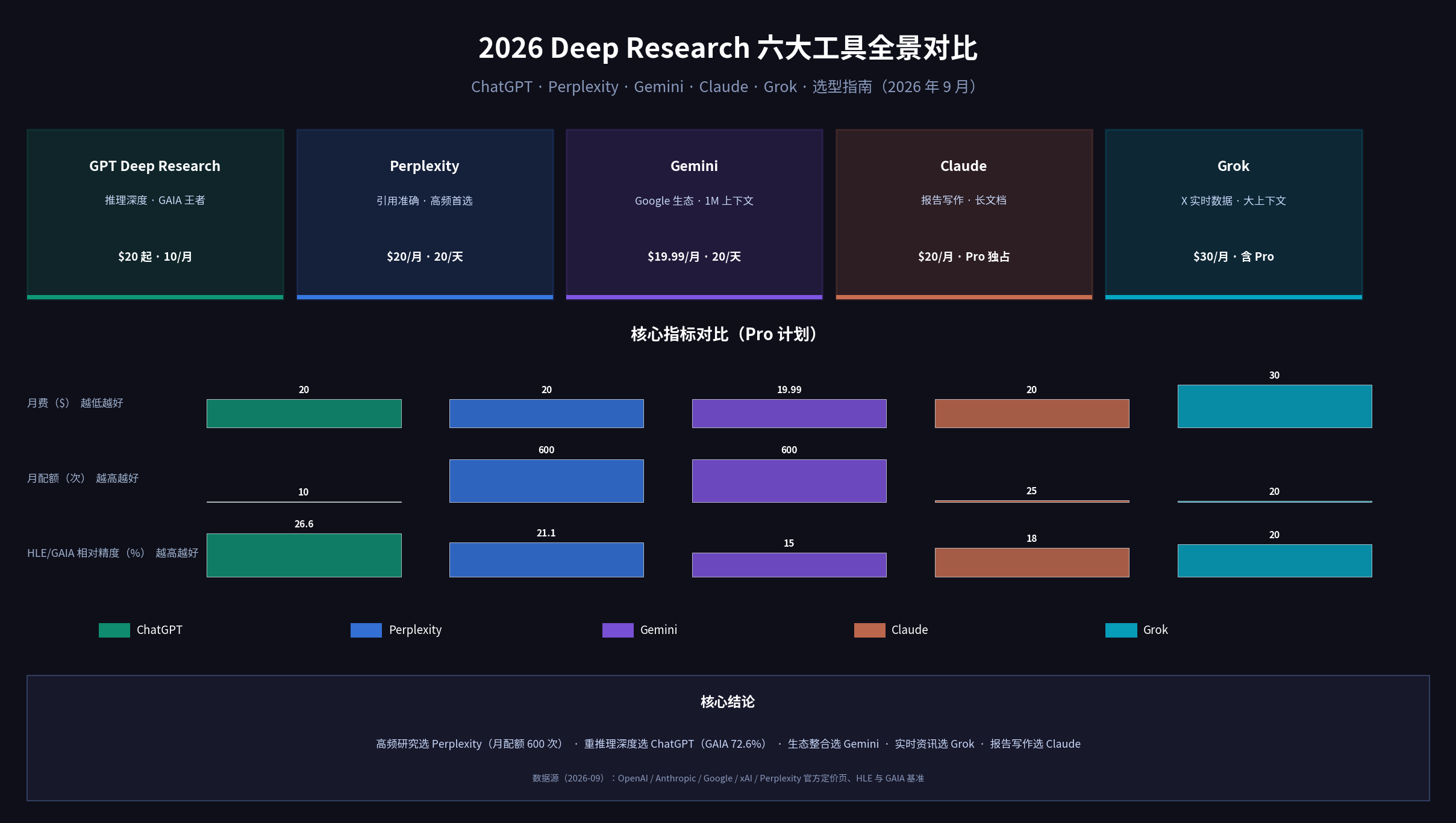
本地部署 LLM 推理引擎是 2026 年的”硬”战场,但与之并行的是另一条更贴近普通用户的赛道:Deep Research(深度研究)。这不是简单的”多问几轮”,而是一个多 Agent 协同的自主研究流程——自己浏览网页、读取来源、交叉验证、再合成结构化报告,整个过程从几分钟到半小时不等。

2026 年的 Deep Research 已不再是”谁有谁能用”的问题,而是**”谁在你预算内跑得更深、更全、更准”**的问题。本文基于 2026 年 8–9 月的最新数据,对比 OpenAI(ChatGPT)、Perplexity、Google(Gemini)、Anthropic(Claude)、xAI(Grok)五大平台,给出可直接选型的量化依据。

2026 Deep Research 六大工具全景对比

阅读全文 »

TL;DR

  • What this is: A 2026 精选清单,覆盖 12 款真正有用的 MCP 服务器,每款给出 GitHub ⭐、核心工具、最佳使用场景和一句话选型建议。
  • This is for: 用 Claude Code / Cursor / Windsurf / Hermes 等 AI 编程 Agent 的开发者,想在一堆 MCP 服务器里挑出真正”装了不后悔”的那几颗。
  • We chose: 用 ⭐ 数 + 生态信号 + 社区口碑的三维筛选法,只保留”解决了具体场景”的服务器,砍掉薄封装与薄文档。

MCP 生态现状:从研究想法变成”默认水管”

2024 年 11 月,Anthropic 开源了 Model Context Protocol(MCP)——一个让 LLM 与外部工具/数据源连接的标准协议。两年后的 2026 年 8 月,生态规模已经惊人:

阅读全文 »

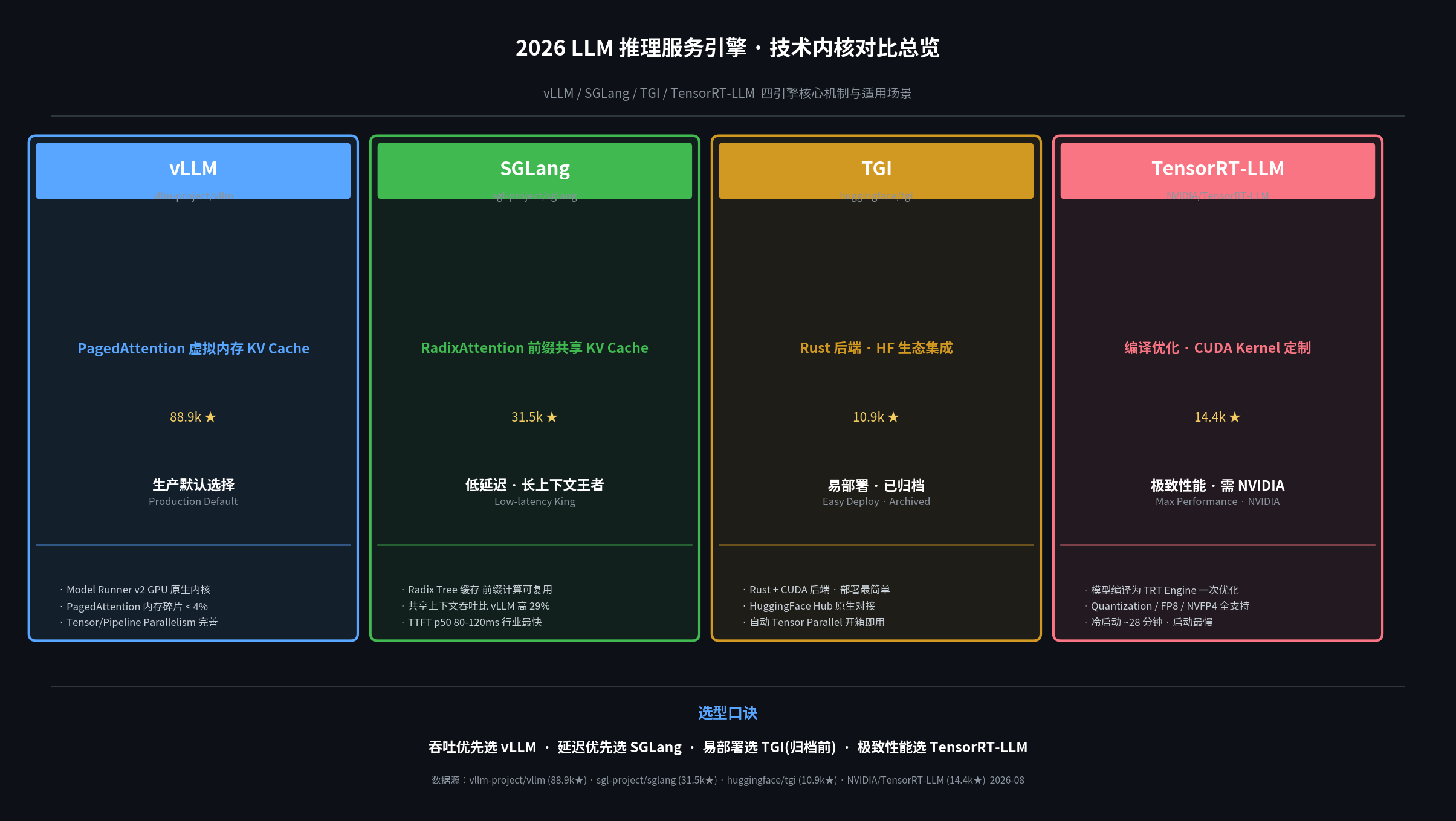
本地部署 LLM 推理服务是 2026 年最务实的降本方向之一。Cloud API 按 token 计费,月跑量上来后账单很快吃掉预算;而自建推理服务的边际成本几乎可以忽略。但引擎一多,选型就成了第一道坎。

本文聚焦 2026 年 8 月主流四款开源推理引擎的技术内核、性能表现、部署坑位,给出可直接执行的选型建议与命令。内容全部基于官方仓库、社区 benchmark、生产部署经验。

四大推理引擎技术内核对比


一、四大引擎全景

阅读全文 »

分析日期:2026-08-14
涉及产品:Anthropic Claude、OpenAI GPT 系列、Google Gemini 2.5+
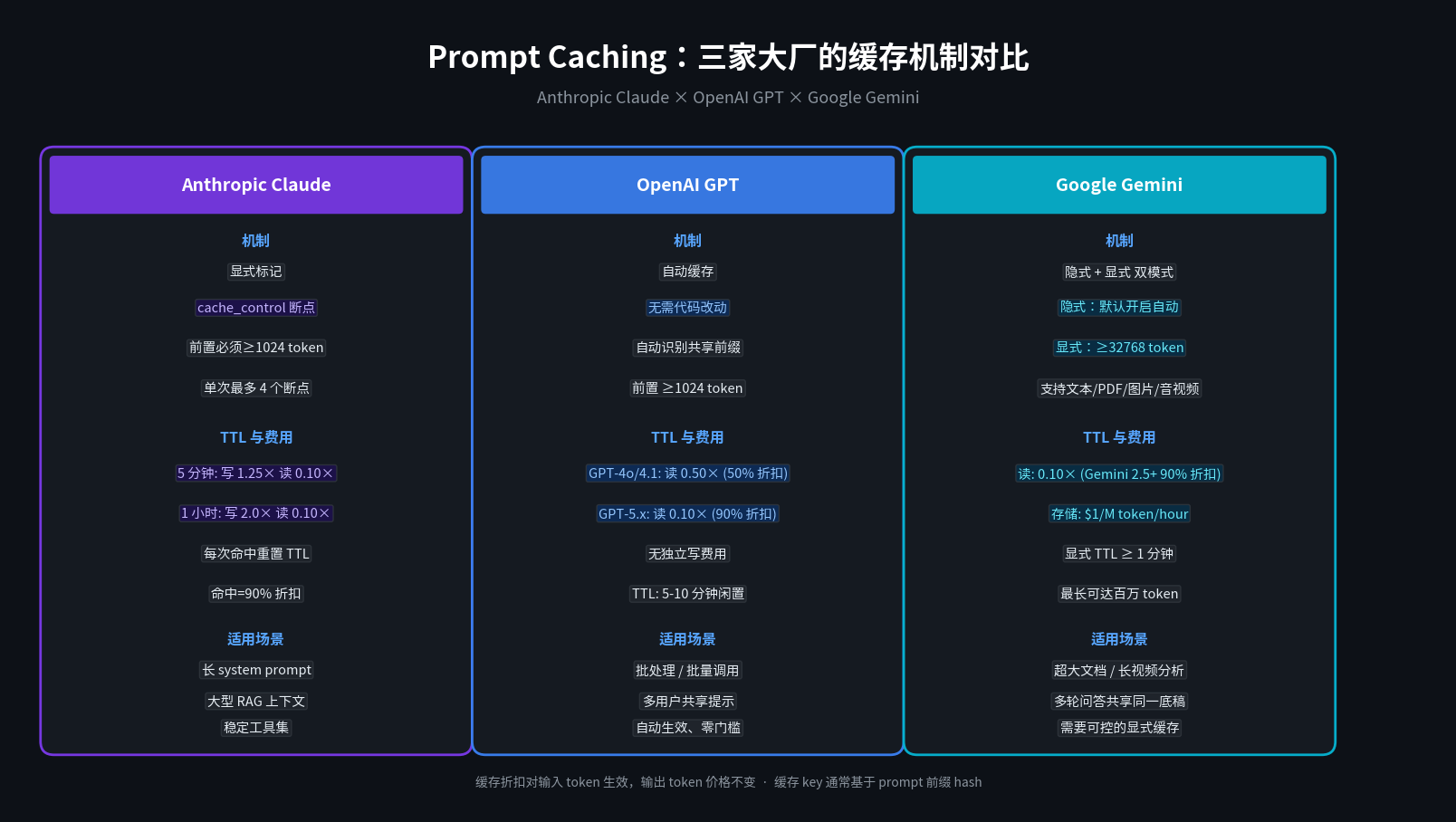
核心问题:如何让同样的 prompt 重复调用时少付 90% 的输入 token 费?

一、为什么要认真看待 Prompt Caching?

LLM API 计费的核心公式很简单:输入 token 价格 × 输入 token 数 + 输出 token 价格 × 输出 token 数。当你的 system prompt 有 3000 token、RAG 上下文有 5 万 token、工具定义又占 2000 token,每次请求都在为这些”几乎不变的内容”重复付费。

Prompt Caching 的本质:把每次请求的”共享前缀”缓存起来,重复调用时只对新增部分做完整前向传播(prefill)。三家大厂 2026 年都已落地,但机制、计费、最低门槛差别很大。

三家大厂的 Prompt Caching 机制对比

阅读全文 »

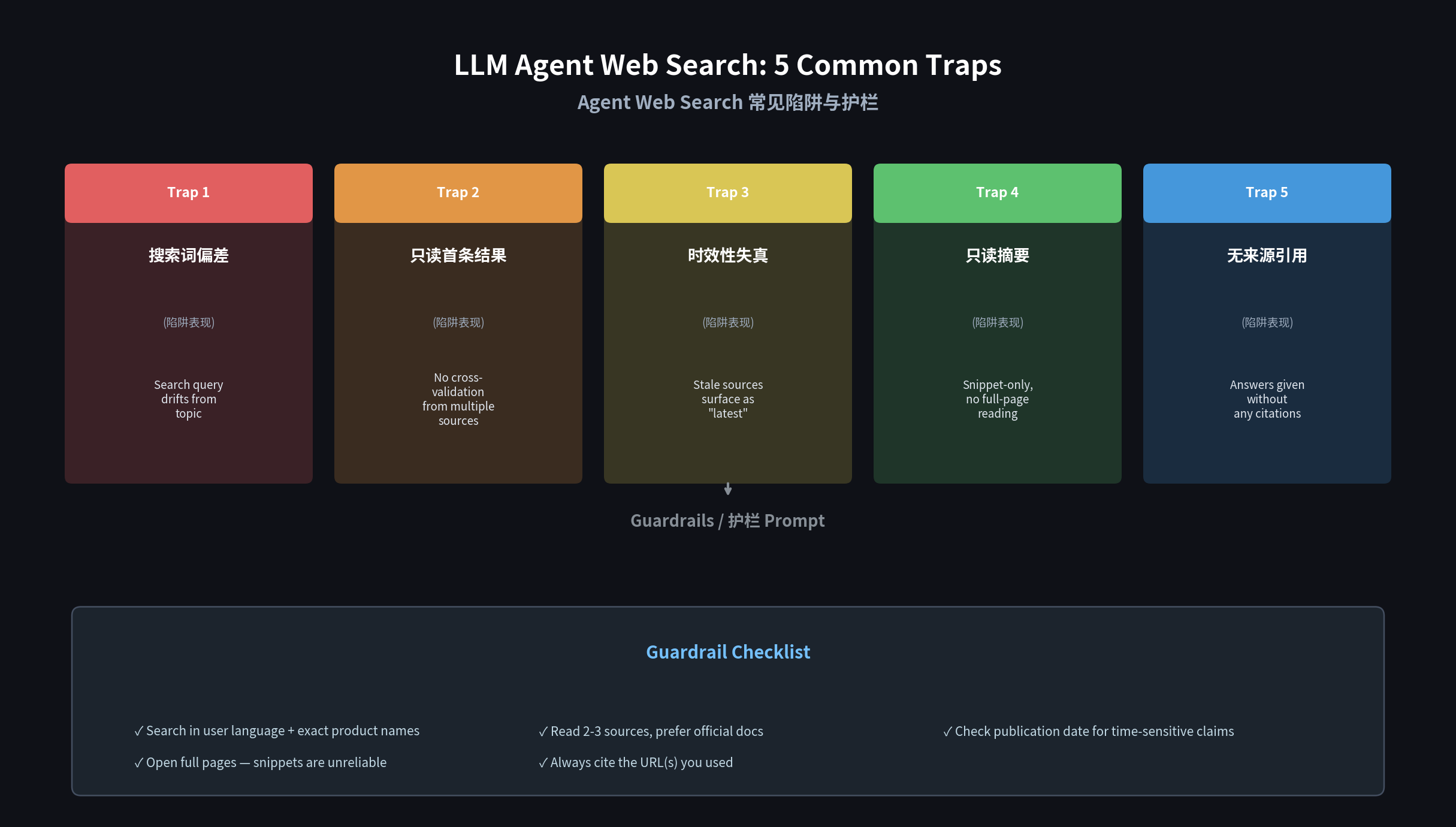
AI Agent 调用 web_search 工具是 2026 年最普及的「让 LLM 上互联网」的方式。表面上,模型搜一下、读一下、答一下,流程很顺;但真到生产环境,搜索结果 ≠ 可靠信息,搜索质量直接决定 Agent 回答的可信度。

Agent Web Search 常见陷阱概览

这篇笔记汇总我们在使用 Hermes Agent、Claude MCP、Cursor Agent 等工具时遇到的真实搜索翻车案例,并给出可复用的 Prompt 护栏。


陷阱 1:搜索词被模型自由发挥,搜偏了

阅读全文 »

引言:Agent 为什么”失忆”?

如果你用过任何 AI Agent,一定遇到过这样的场景:聊到一半,它突然”忘了”你五分钟前交代的要求;新开会话后,之前的所有决策需要重新解释一遍。这不是 Agent 不努力,而是记忆架构的缺陷——大多数 Agent 把”记忆”等同于”把上下文塞进 Prompt”,而上下文窗口是有上限的。

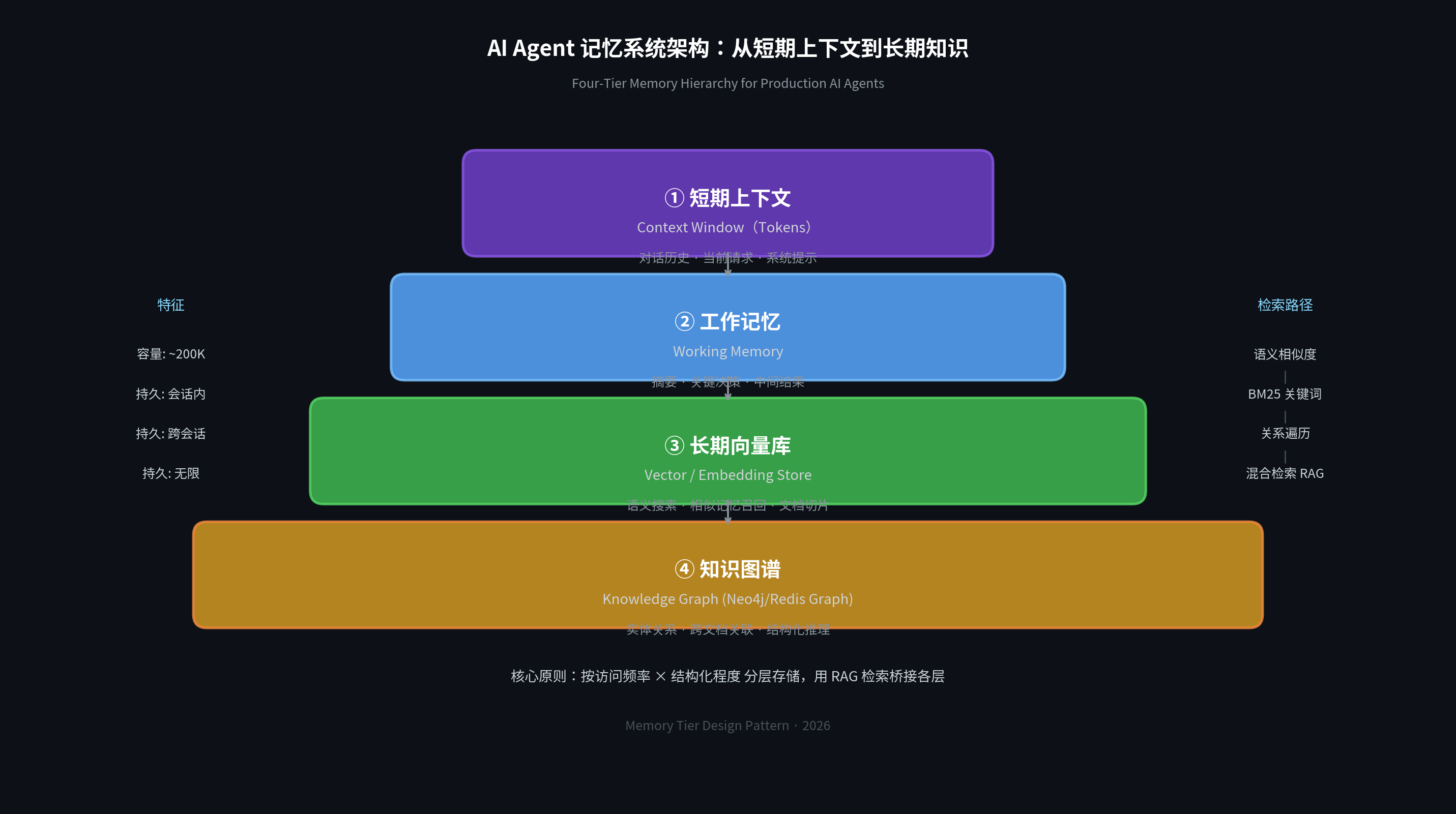
随着 Agent 从一次性对话走向长期运行的生产系统,记忆(Memory)已经成为 Agent 架构中独立的、必须认真对待的一层。本文将拆解生产级 Agent 记忆系统的四层架构,并讨论从短期上下文到长期知识图谱的演进路线。

一图看全貌:四层记忆架构

AI Agent 记忆系统四层架构

阅读全文 »
0%